Nuclear Sirtuins And The Aging Of The Immune System
Sep 26, 2022
Please contact oscar.xiao@wecistanche.com for more information
Abstract: The immune system undergoes major changes with age that result in altered immune populations, persistent inflammation, and a reduced ability to mount effective immune responses against pathogens and cancer cells. Aging-associated changes in the immune system are connected to other age-related diseases, suggesting that immune system rejuvenation may provide a feasible route to improving overall health in the elderly. The Sir2 family of proteins, also called sirtuins, have been broadly implicated in genome homeostasis, cellular metabolism, and aging. Sirtuins are key responders to cellular and environmental stress and, in the case of the nuclear sirtuins, they do so by directing responses to chromatin that include gene expression regulation, retrotransposon repression, enhanced DNA damage repair, and faithful chromosome segregation. In the immune system, sirtuins instruct cellular differentiation from hematopoietic precursors and promote leukocyte polarization and activation. In hematopoietic stem cells, sirtuins safeguard quiescence and stemness to prevent cellular exhaustion. Regulation of cytokine production, which, in many cases, requires NF-KB regulation, is the best-characterized mechanism by which sirtuins control innate immune reactivity. In adaptive immunity, sirtuins promote T cell subset differentiation by controlling master regulators, thereby ensuring an optimal balance oof helper (Th) T cell-dependent responses. Sirtuins are very important for immune regulation, but the Means by which they regulate immunosenescence are not well understood. This review provides an integrative overview of the changes associated with immune system aging and its potential relationship with the roles of nuclear sirtuins in immune cells and overall organismal aging. Given the anti-aging properties of sirtuins, understanding how they contribute to immune responses is of vital importance and may help us develop novel strategies to improve immune performance in the aging organism.
Keywords: sirtuins; epigenetics; aging; immune system; immune senescence; inflammation
1. Introduction
Cellular and organismal functions inevitably become compromised with age. bioflavonoids With the increasing average age of societies, there has been a growth in the research effort being invested in the molecular and cellular basis of aging. The ultimate aim is to extend the lifespan or the health span through therapies or habits that either delay the advent of degenerative syndromes or palliate their consequences. In 2013, Lopez-Otin et al. defined nine hallmarks of mammalian aging from a cellular perspective. These included alterations in the epigenome, genomic instability, mitochondrial and stem cell dysfunction, and los of proteostasis[1]. Loss of cellular fitness resulting from the progressive development of these pathological defects eventually impairs organismal functions and is expected to be therapeutically targetable.

Please click here to know more
In this context, the immune system is now recognized as an important driver of the aging process. For instance, specific deletion of the DNA repair factor Excision Repair Cross-Complementation Group 1 (ERCC1) in hematopoietic stem cells results not only in greater DNA damage in immune cell subtypes but also in premature senescence and organismal aging. Furthermore, transplantation of aged splenocytes into young mice is enough to accelerate the aging phenotype, while transplantation of young splenocytes into old mice reduces senescence markers in several non-immune tissues [2].
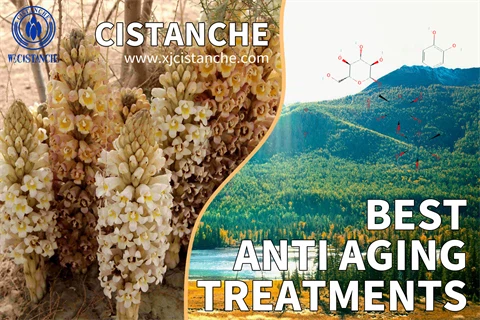
Cistanche can anti-aging
Despite this intriguing recent evidence, the mechanisms by which aging affects immune function has long been a matter of interest. Proper immune function largely depends on the concerted action of its diverse components, and immune cell aging is observed across virtually all immune cell types. Therefore, cumulative perturbations in the physiology of the immune system eventually reduce its ability to respond to both exogenous and endogenous insults[3]. The practical consequences of immunosenescence involve defective clearance of damaged and potentially harmful cells; a concomitant increase of senescence markers in non-immune organs; a higher risk of developing cancer, diabetes, neurodegenerative disorders, autoimmunity, and other maladies; and a poor response to infections and vaccines[4-6]. One major manifestation of innate immune aging is in-filmmaking, a persistent low-grade inflammation that gradually leads to, among others, hematopoietic stem cell (HSC) and T cell exhaustion, thus impairing immune function. buy cistanche In addition, inflammation is thought to facilitate the onset of age-dependent diseases [7]For instance, exacerbated reactivity of microglia (a macrophage type in the brain) has been linked to neurotoxicity and neurodegenerative diseases [8]. Together, these defects in immune function hugely undermine organismal physiology, highlighting the central role of immunosenescence in the overall aging process.
Sirtuins are an evolutionarily conserved family of proteins that harbor NADt-dependent deacetylase and ADP-ribosyltransferase enzymatic activities[9]. In mammals, there are seven sirtuins [10], which can be localized either in the nucleus, as is the case for SIRT1, SIRT6, and SIRT7,or in the mitochondria, as is the case of SIRT3, SIRT4, and SIRT5.SIRT2 is mostly found in the cytoplasm but binds to chromosomes during mitosis. Sirtuins promote cellular adaptation to stress by regulating epigenetics in the nucleus, cellular metabolism in the mitochondria, and the crosstalk between them. Nuclear sirtuins regulate chromatin function through complex regulatory networks of histone and nonhistone substrates. In this regard, sirtuin-dependent regulation of epigenetic information is closely associated with lysine (K) acetylation (ac) of histones H3 and H4, including H4K16ac, H3K9ac, H3K56ac, H3, H3K18ac,and H3K36ac (Figure 1).Importantly,sirtuin-dependent histone deacetylation is tightly linked to the regulation of histone methylation (me) of the same or nearby lysine residues. For instance, SIRT1 orchestrates heterochromatin formation through H3K9ac deacetylation and suppressor of variegation 3-9 homolog 1 (SUV39H1) activation [11]thereby increasing H3K9me3,an archetypal heterochromatic mark. During G2/M transition, SIRT2 supports chromosome condensation by deacetylating H4K16ac and concomitantly activating PR/SET domain-containing protein 7 (PR-SET7)methyltransferase to induce monomethylation of H4K20 (H4K20mel) [12], another epigenetic mark with repressive functions. SIRT6 plays important roles in gene silencing[13], DNA damage repair [14]and chromosome segregation [15] through H3K9ac, H3K56ac, and H3K18ac regulation, respectively, and SIRT7 functions in gene [16] and retrotransposon silencing [17] and DNA damage repair [18] through H3K18ac and H3K36ac deacetylation. It is of particular note that, under cellular stress, SIRT7 auto-ribosylation leads to its recruitment to chromatin through macro-H2Al interaction, resulting in gene transcriptional adaptation [16]. Sirtuins are ubiquitously expressed proteins with important roles in numerous tissues [19]. At the organismal level, nuclear sirtuins play major roles in determining the onset of aging and the health span. SIRT1, SIRT6, and SIRT7 are associated with human and rodent longevity [20-22], and mice overexpressing SIRT6 throughout the body or SIRT1 specifically in the brain both prolong the lifespan [23,24]. Accordingly,mice deficient for Sirt1, Sirt6 and Sirt7 genes develop progeroid.-like syndromes [18,25,26],and Sirt2-deficient mice have an increased cancer risk[12,27]. Sirtuins are highly expressed in immune cells and play multiple roles in cytokine production, inflammation, and the development of innate and adaptive responses. Here, we review the role of nuclear sirtuins in immune cells and discuss their connections with the aging of the immune system.
2.HSCS
HSCs are responsible for the long-term generation of blood cell types and can be classified as long- and short-term HSCs. Long-term HSCs (LT-HSCs) are a quiescent population that sustain life-long generation of blood celltypes. They first differentiate into short-term HSCs (ST-HSCs), which are able to reconstitute the myeloid and lymphoid compartments for several weeks (Figure 2). During aging, HSCs undergo substantial age-related deterio-ration. Cell-intrinsic and cell-extrinsic alterations progressively prime-aged HSCs to form a phenotype that resembles that of activated young HSCs[28]. At steady state, young HSCs are quiescent unless organismal challenges, particularly infections, arise, in which case they dramatically switch their metabolism to sustain the massive de novo production of immune cell progenitors. Thus, the increased frequency of these challenges with age, together with chronic inflammation and organismal stressors, gradually disrupt HSC resting. Abnormal HSC activity eventually gives rise to HSC exhaustion, reduced regeneration capacity and myeloid bias [29]. Furthermore, clonal hematopoiesis helps hierarchically dampen the fitness of the immune system as it ages. In aged HSCs, defective DNA repair, cumulative DNA damage, and replication stress increasingly cause genomic instability that can be clonally inherited by their cellular progeny [30]. Thus,HSC aging affects the quantity and quality of progenitor and mature immune cells.

Figure 2. Overview of immune system ontogeny and its relationship with nuclear sirtuin activity. Hematopoiesis starts inthe bone marrow through sequential differentiation of hematopoietic stem cells (HSC) into different immune cell progenitors(upper part). Innate immune cells originate from a common myeloid progenitor (MCP) and involve a variety of immunecell types including monocytes (Mo), macrophages (Mϕ), eosinophils (Eos), basophils (Baso), and neutrophils (Neu) (leftlower part). Common lymphoid progenitors (CLP) give rise to B cells in the bone marrow and T cells in the thymus (thy)(right lower part). Natural killer (NK) cells, despite having a lymphoid origin, play important roles in innate immunityagainst tumors and viral-infected cells. Dendritic cells (DC) have a lymphoid and myeloid origin (not shown in this figure)and sit at the interphase of innate and adaptive immunity. Sirtuins icons denote sirtuin cell type-specifific roles. ST-HSC:short-term HSC; LT-HSC: gong-term; MPP: Multipotent progenitor. Figure created with BioRender.com.

Concomitantly,metabolic deregulation, epigenetic alterations, and loss of mitochon-drial homeostasis are key hallmarks of HSC aging [28,29]. These defects are highly inter-connected, and sirtuins have been proposed to be situated at their crossroads [29]. Indeed, SIRT1, SIRT2,and SIRT7 are downregulated during aging in HSCs (Figures 2 and 3),and SIRT7 expression is reduced in senescent iPSCs [31-33]. Further, the SIRT1 and SIRT2 target histone mark H4K16ac is reduced in aged HSCs [34]. Several studies have reported SIRT1 to be essential for HSC integrity and for maintain-ing their self-renewal capacity and lineage specification. Sirt1/HSCs recapitulate several characteristics of aged HSCs [39]. Similar to what is observed during aging, Sirtl/HSCs escape quiescence and exhibit increased DNA damage and ROS accumulation. Notably, the activity of the transcription factor Forkhead Box(FOXO3), which sustains quiescence and self-renewal capacity in HSCs, is positively regulated by SIRT1 deacetylation in HSCs and other cell types. cistanch SIRT1 deletion in adult mice renders HSCs myeloid-biased and induces anemia and lymphopenia. Likewise, several genes commonly upregulated in aged HSCs show increased expression upon Sirt1 deletion. During aging, the number of HSCs paradoxically increases as a consequence of the loss of quiescence, which ends up reducing HSC regenerative capacity. Accordingly, in the absence of SIRT1, the frequency of LSK (Linage-Sca-1 plus Kit plus , a heterogeneous cellular population containing HSCs) cells and LT-HSCs increases,although the frequency of ST-HSCs is unaffected [39].In contrast, acute pharmacological inhibition of SIRT1 with Sirtinol (Table 1) in murine fetal LSK cells reduces the frequency of LSK cells,indicating that temporal or chronic loss of SIRTI ac-tivity can have different repercussions on HSC biology. In ex vivo-cultured LSK cells, the pan-sirtuin inhibitor nicotinamide (NAM) promotes HSC differentiation, while the sirtuin agonist resveratrol sustains stemness by repressing HSC differentiation. Similarly, in vitro-cultured LSK cells from Sirtl/ mice show lower self-renewal capacity as a consequence of a mechanism involving FOXO suppression, p53 activation, and ROS accumulation [35]. Although SIRT1 downregulation has been reported in aged HSCs, there are some conflicting findings in this regard, so it is a matter of debate. Rimmele and coworkers reported in mice that SIRT1 expression was higher in LSK cells than in total bone marrow (BM) cells, while aged murine HSCs expressed reduced SIRT1 levels [39]. In contrast, Chambers et al. did not find any age-related transcriptional downregulation of SIRT1 in the murine HSCs [32]. The study conducted by Xu et al. did not reveal differential expression of SIRTl in LSK cells from aged mice, either. However, they reported an interesting mechanism by which SIRT1 protein levels are post-transcriptionally decreased due to selective autophagic degradation of the SIRT1 protein [49].

Sirtuins have also been implicated in the preservation of mitochondrial integrity in HSCs during aging. Indeed, SIRT2 has been linked to the maintenance of HSC homeostasis in aged mice via suppression of the NLR family pyrin domain containing 3 (NLRP3)inflammasome, a multimeric protein complex involved in sensing damage- and pathogen-associated molecular patterns.In aged HSCs,mitochondrial stress can trigger the activation of NLRP3, and aberrant activation of the NLRP3 inflammasome is known to drive cell death and functional decline in HSCs during aging. cistanche Australia While young Sirt2/mice have normal HSC frequencies with full regenerative capacity, that of HSCs is lower in old Sirt27 mice. Notably, SIRT2 is expressed at reduced levels in aged HSCs, which is associated with greater NLRP3 inflammasome activation, thereby representing a plausible mechanism of HSC decline in aged Sirt2-/mice [36].
SIRT6 has not been directly related to HSCs in the context of aging, but it is known to be necessary for HSC quiescence and welfare. SIRT6 deficiency results in a progeroid HSC phenotype due to epigenetic dysregulation of Wnt signaling. HSC homeostasis is largely influenced by Wnt ligands and signaling, which help maintain HSC integrity [50,51]. SIRT6 interacts with the Wnt signaling transcription factor LEF1 (lymphoid enhancer binding factor 1), which recruits SIRT6 to Wnt target genes. At the promoters of these genes, SIRT6 deacetylates its target H3K56ac and thereby silences their expression. cistanche benefits In the absence of SIRT6, Wnt target genes become overexpressed, resulting in aberrant HSC proliferation that ultimately leads to HSC exhaustion and diminished self-renewal capacity. This Sirt6 deficient phenotype can be reversed by inhibition of Wnt signaling[37].
SIRT7 is highly expressed throughout the hematopoietic system [52]. SIRT7 knock-out mice exhibit a whole-body progeroid phenotype [18], and Sirt7/HSCs show several characteristics of aged HSCs: loss of quiescence, myeloid bias, and increased propensity to enter the cell cycle when stimulated with cytokines ex vivo [31].In HSCs, SIRT represses the expression of several genes coding for mitochondrial ribosomal proteins and tran-scription factors by direct interaction with their promoters in a nuclear respiratory factor 1 (NRF1)-dependent manner. Aged immune cells exhibit mitochondrial dysregulation, which involves inefficient mitochondrial function and increased mitochondrial mass [38]Mitochondrial dysfunction leads to the accumulation of misfolded proteins and invokes the mitochondrial unfolded protein response (mtUPR), an adaptive reaction that aims to recover the compromised mitochondrial proteostasis. Sirt7/HSCs display increased mitochondrial mass and enhanced basal expression of mtUPR genes, while SIRT7-knocked. down (KD) cells show inefficient clearance ofmisfolded proteins. This suggests that Sirt7-h HSCs are subject to constitutive mitochondrial stress, which makes them adopt an aged immune cell phenotype. In aged HSCs, ribosomal DNA (rDNA) transcription has been linked to replication and increased DNA damage. SIRT7 is a major regulator of rDNA transcription [52],acting through the control of different components of the basal transcriptional machinery, but whether this function may play a role in proteostasis and metabolism in aged HSCs is not known.
3.Innate Immunity
Innate immunity involves a variety of cell types,including natural killer (NK) cells, various macrophage populations, monocytes, dendritic cells, neutrophils, eosinophils, and basophils (Figure 2). Innate immune cells originate from hematopoietic stem cells in the bone marrow and, in some cases, through direct self-renewal [53]. In adulthood, innate immune cells reside in most of our tissues, where they play important roles in responding to external threats and in tissue homeostasis. The abundance, distribution and function of innate immune cells are markedly altered with aging, the long-term and constitutive low-grade secretion of proinflammatory cytokines being an important feature contributing to the aging process. Indeed, this state of chronic inflammation, or inflammation, is a typical feature of immunosenescence that actively contributes to the deterioration of immune and non-immune tissues [54]. Sirtuins regulate the function of innate immune cells at multiple levels with important implications for immune and organismal aging (Figure 2). For the most part, sirtuin downregulation in human innate immune cells is associated with proinflammatory processes, and their overexpression is thought to protect tissues. Similarly, whole-body or myeloid-specific sirtuin deficiency in mice results in the development of different inflammatory conditions, including autoimmunity, obesity, and neurodegeneration [55-58].
This article is extracted from Genes 2021, 12, 1856. https://doi.org/10.3390/genes12121856 https://www.mdpi.com/journal/genes